

Scheduled water delivery keeps drinking water on a recurring routine, while on-demand delivery lets you request a refill when supplies run low. For gallon water, options can include standard 5-gallon jugs and smaller 3-gallon jugs, along with cases of bottled water. The right setup depends on how much water your home or office uses and how often you want it delivered.
Empty jugs are part of the practical side of delivery, too. You’ll learn how pickup fits into a delivery visit, what to expect from scheduled and on-demand service in San Diego, and how different bottle sizes can suit home or workplace needs. This guide lays out the basics in plain terms, so you can choose a steady routine that works for your space and avoid running short between deliveries.
Key Takeaways
- Learn how delivery visits and empty-jug pickup fit into a practical water routine.
- See what to consider when arranging water for a San Diego home or office.
- Compare recurring deliveries with ordering only when supplies run low.
- Explore how different gallon sizes can match your household or workplace needs.
Water delivery process and empty-bottle pickup
Scheduled water delivery starts with choosing a water format and a repeat routine. Estimate household use based on drinking, cooking, and the number of people at home. Then choose a delivery cadence that fits your storage space and consumption. If you run low before the next visit, adjust the schedule or quantity.
For home delivery, the exchange is simple: full bottles arrive, and empty returnable bottles are collected during the same visit. Keep empties together near the delivery point so they’re easy to find and move. Returnable jugs go back into the delivery cycle, not household recycling. Single-use plastic bottles have a different disposal route, so follow the container label and local recycling guidance.
What types can be scheduled? Bottled water is practical for homes, while bulk potable water suits different volume and storage needs. The right format depends on how you use water and what your space and equipment can accommodate.
How can you assess drinking-water safety? Check the bottle’s seal, label, source information, and handling directions before use. Store bottled water as directed, away from heat and chemicals, and don’t use containers with a broken seal or visible damage. These steps help you assess the delivered product without assuming every format is handled the same way.
Container size affects storage, lifting, and dispenser fit. Common options include standard 5-gallon jugs, 3-gallon jugs, and cases of 16.9-ounce bottles. A cooler can make larger jugs easier to use, while smaller bottles suit individual servings. For self-service, filling your own bottles is another option. Match each format to the space available and the people using it.
Before the first visit, decide where full bottles should go and where empties can wait. Note the bottle size and quantity, along with any access instructions. A clear drop-off spot keeps the exchange orderly and makes future scheduled deliveries easier to manage.
Home and office water delivery in San Diego
Throughout San Diego and nearby communities, delivery planning starts with your address and where you plan to use the water. A household may need drinking water for daily meals and hydration; an office may need a steady supply for a shared break area and staff. These needs determine your bottle quantities, access instructions, and the ideal drop-off point.
Local delivery routes serve San Diego neighborhoods including La Jolla, Pacific Beach, Hillcrest, North Park, and Mission Valley, as well as surrounding areas like Chula Vista, El Cajon, La Mesa, Escondido, and Carlsbad. For recurring visits, simply provide your delivery address and drop-off instructions. An office can specify the building entrance and the exact room where bottles should go.
Which companies serve your area? Residents and businesses throughout San Diego can arrange bottled-water delivery through Wolf Water Company. Scheduled delivery makes regular drop-offs practical when your address is on the local route.
Spring water and purified water are different types of water. Read the bottle label for the water type and source. If you prefer spring water, look for that description on the product label. Bottled water isn’t automatically spring water just because it arrives in a bottle.
What rules or permits apply to bulk water delivery? Requirements may depend on the water’s intended use, how it’s transported, and local regulations. Tank deliveries differ from bottled drinking water, so the delivery format and intended use determine which local requirements apply.
At home, choose a storage spot that keeps bottles accessible without blocking a walkway. In an office, set a consistent drop-off location near the cooler or break area. Clear instructions help the delivery service complete each visit efficiently. To review local water delivery options, consider the format and routine that fit your space.
Recurring and on-demand delivery options
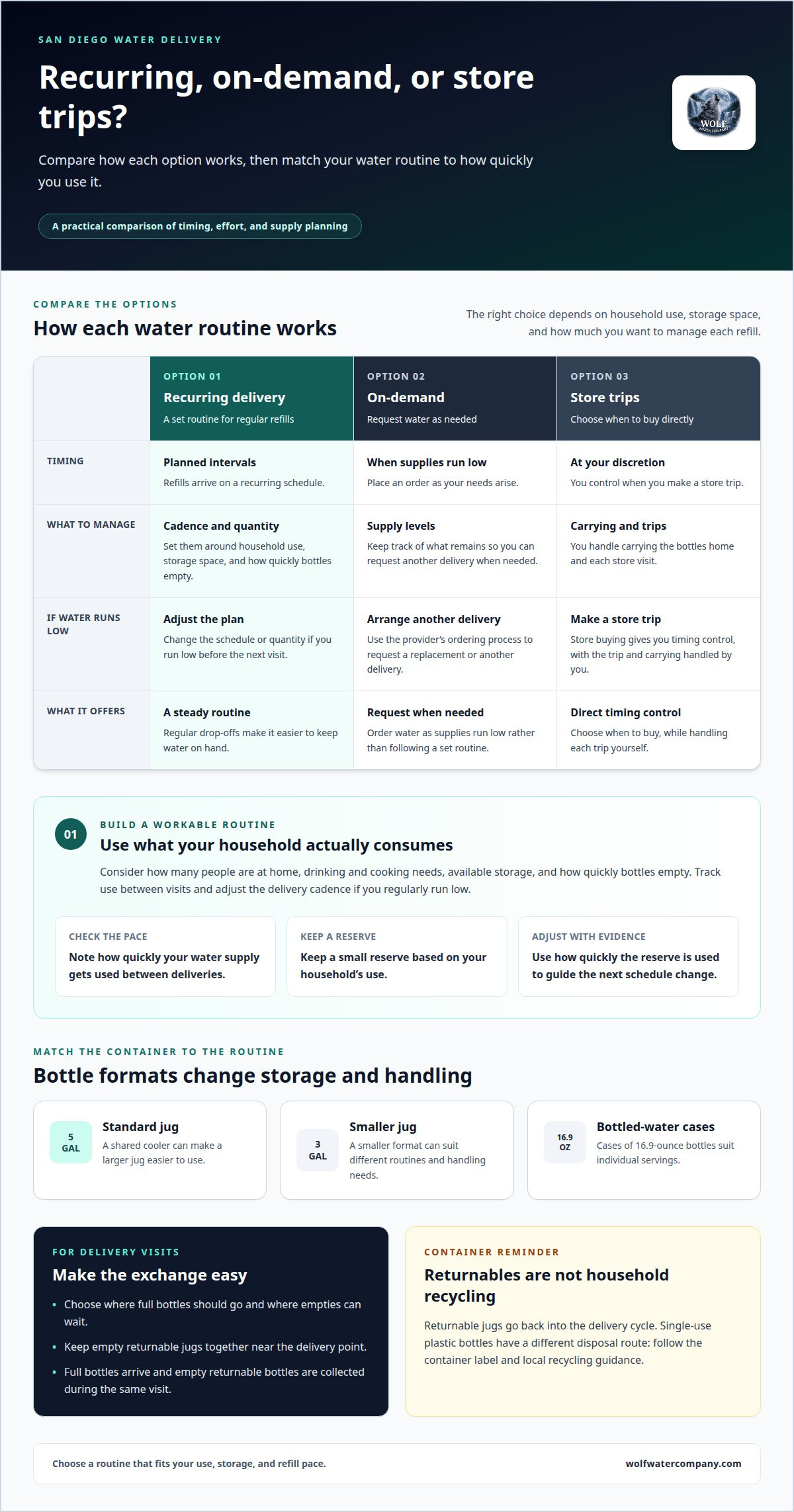
A recurring delivery replenishes your supply on a set routine. Choose a cadence based on household use, storage space, and how quickly bottles empty. A home with frequent cooking and several people, for example, may need deliveries more often than a smaller household. Track use between visits and adjust the schedule if you regularly run low. A steady plan is convenient and makes it easier to keep water on hand.
How does scheduled water delivery compare with on-demand ordering or store trips? A recurring plan brings refills at planned intervals, while on-demand orders let you request water as needed. Buying from a store gives you direct control over timing, but means carrying bottles home and handling each trip yourself.
If a delivery is missed or delayed, or water runs low, use the provider’s ordering process to arrange a replacement or request another delivery. Keep a small reserve based on your household’s use, and note how quickly it gets used. That gives you a clear basis for adjusting the next scheduled delivery instead of guessing.
Reusable returnable bottles can help reduce reliance on single-use plastic. Keep returnable containers together for collection, and choose a bottle format that fits your daily use. Larger containers can work well at a shared hydration station, while smaller bottles suit individual portions. Bottle choice also affects storage and handling.
Cooler temperature options depend on the equipment selected. Consider whether your home needs chilled water, room-temperature water, or both, then choose a cooler that suits that preference. Place it near a kitchen or shared work area, with enough room to change bottles safely. For refreshing water throughout the day, pair the cooler’s use with a delivery cadence that matches consumption. A simple review of bottle use and cooler needs can keep the plan practical as routines change.
Gallon water delivery
Gallon water delivery suits households that want drinking water ready at home. A standard 5-gallon jug supplies a shared cooler, while smaller formats can fit different routines. Choose based on how many people drink water at home, how often they refill, and where full containers will be stored. The best format is the one your household can use and handle comfortably.
Start by checking how you use water. Note how often your current container empties and whether you also use drinking water for cooking or coffee. If a jug runs out well before the next visit, increase the delivery quantity or adjust the schedule. If bottles remain unused, reduce the quantity or choose a smaller format. This turns guesswork into a practical plan.
Container size changes the delivery setup. A 5-gallon jug works with a compatible water cooler, while a 3-gallon jug takes less storage space. Cases of 16.9-ounce bottles suit individual servings or carrying water away from home. Keep the chosen format consistent where possible, so storage, cooler use, and empty-container handling stay straightforward.
Consider the full route from delivery point to cooler. Measure the storage area, keep walkways clear, and choose a spot where bottle changes are manageable. Smaller containers may be easier to store in a kitchen with limited room, while a household that uses a cooler regularly may prefer larger jugs. Match the format to your space and routine, not just the label.
For drinking water plus coffee use, estimate both needs before setting a recurring quantity. Keep a note of how quickly bottles empty, then revise the plan when household routines change. This simple record helps prevent a shortage without leaving more water than the available storage can hold. Choose the format that best fits your home, and explore gallon water delivery options.
Wolf Water Company
Wolf Water Company helps households and workplaces arrange drinking water around their daily needs. Homeowners can choose recurring 5-gallon delivery, while offices can build a water routine around their shared space and use. Water cooler rental can support convenient access, and self-service bottle filling suits customers who prefer to bring their own containers.
Choose a setup that suits your storage, cooler, and typical water use. Wolf Water Company offers scheduled jug delivery for households and practical beverage programs for offices. Contact Wolf Water Company to discuss a water delivery arrangement that fits your needs.
Make Water Delivery Part of Your Routine
A useful water plan fits the way your household or workplace runs. Treat it as a routine you can adjust when daily needs change, rather than an arrangement you never revisit. A new work pattern, a busier kitchen, or a change in who shares the space can affect water use. Keep the setup easy to follow, with a clear place for bottles and a simple way to note changing needs.
With scheduled water delivery, the next step is choosing an arrangement that makes sense for your space and routine. Wolf Water Company serves residential and commercial needs, with options for home delivery, office solutions, and self-service bottle filling. Contact the team to talk through the setup that fits. Contact Wolf Water Company and take the next step toward a water routine that feels manageable.
Frequently Asked Questions
What is scheduled water delivery and how does it work?
Scheduled water delivery is a recurring arrangement that brings drinking water to your home based on an agreed routine. Wolf Water Company delivers purified water in standard 5-gallon jugs for residential customers. To make the routine fit, consider who uses the water, how quickly your supply runs down, and where you keep full containers. A change in household use can be a reason to revisit the arrangement.
How do I schedule, change, or cancel a water delivery?
To set up or update delivery, provide the service address, water format, quantity, and preferred routine. When changing an order, say what should be different, such as the number of jugs or delivery cadence. To cancel, clearly request that deliveries stop. Households in Sunbury, Selinsgrove, Lewisburg, Mifflinburg, Middleburg, Muncy, Montoursville, Williamsport, Allenwood, Loganton, Ashland, and Northumberland can contact Wolf Water Company with their request.
How often can water deliveries be scheduled, and are recurring plans available?
Recurring home delivery is available, and the schedule should reflect how quickly your household uses water. A household using water for drinking and cooking may need a different routine from one mainly filling a cooler. Consider your usual consumption and storage space, then choose a cadence that keeps water on hand without crowding the storage area. Revisit the routine when household needs change.


